Batsyeba Script: A Modern Evaluation of a Feminine Display Type
In the crowded landscape of digital typography, finding a script font that balances artistic flair with functional readability is a persistent challenge. Many modern scripts suffer from being either too rigid to feel authentic or so loose they become illegible at smaller sizes. Batsyeba enters this space as a distinct alternative, offering an irregular baseline that immediately signals its intent: it is designed to mimic the organic flow of hand-lettering while maintaining the structural integrity required for professional applications. This evaluation explores the specific characteristics of Batsyeba and determines where it fits within a serious design workflow.
The Core Identity of Batsyeba Script
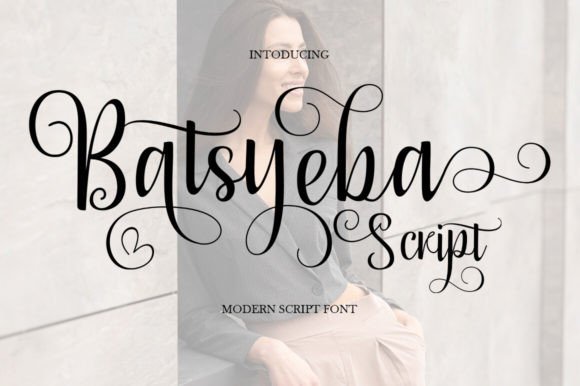
Batsyeba is not merely a decorative typeface; it is a modern script font engineered with a specific aesthetic in mind. Its most defining feature is the irregular baseline. Unlike traditional serif or sans-serif fonts that sit on a perfectly straight line, Batsyeba mimics the natural variation found when a pen moves across paper. This creates a sense of movement and rhythm that static fonts often lack. The style is undeniably trendy and feminine, yet it avoids the saccharine clichés that plague many similar typefaces.
The design philosophy behind Batsyeba suggests a focus on ink and watercolor aesthetics. When rendered digitally, the letterforms possess a weight and texture that suggest physical media. This makes it particularly effective for projects where the goal is to evoke a tactile experience. The font includes initial and terminal letters, which are crucial for creating varied sentence structures and preventing repetitive patterns. Furthermore, the inclusion of alternates allows designers to break up monotony, ensuring that repeated words do not look identical. With support for multiple languages, the font extends its utility beyond English-speaking markets, adding significant value for international branding efforts.
Practical Applications in Professional Design
While the visual appeal of Batsyeba is evident, its true worth lies in its versatility across different mediums. For professionals working in event planning, publishing, or branding, the ability to switch between a standard sans-serif for body text and a dynamic script for headlines can define the success of a layout.
- Wedding Invitations: The primary use case for Batsyeba remains high-end stationery. The feminine style aligns perfectly with wedding themes, but the irregular baseline prevents the design from looking generic. It works exceptionally well for names and dates, providing a focal point that feels personal rather than mass-produced.
- Branding and Logos: Small business owners and entrepreneurs often struggle to find a logo font that conveys elegance without sacrificing clarity. Batsyeba offers a solution for businesses in lifestyle, beauty, and creative sectors. The initial and terminal alternates allow for unique wordmarks that stand out in a crowded marketplace.
- Digital Content: Bloggers and content creators frequently need to highlight quotes or key takeaways. Using Batsyeba for pull quotes adds a layer of sophistication that standard serif fonts cannot match. However, care must be taken regarding size and contrast to ensure legibility on mobile devices.
- Marketing Materials: From thank you cards to greeting cards, the font's watercolor-friendly nature makes it ideal for print-on-demand services. The varying stroke widths simulate the pressure of a brush, adding depth to otherwise flat vector graphics.
Evaluating Usability and Technical Performance
When assessing any font for commercial use, technical reliability is just as important as aesthetics. Batsyeba demonstrates a solid foundation in terms of character set and language support. The inclusion of extended Latin characters ensures that names and locations from various European languages can be typeset correctly without resorting to workarounds. This is a critical factor for global brands that require consistency across different regions.
The alternates provided within the font family are a significant strength. In many script fonts, the same glyph appears repeatedly, creating a robotic feel. Batsyeba mitigates this by offering multiple options for common letters. This flexibility allows designers to manually adjust the flow of a paragraph, turning a block of text into a curated piece of art. The initial and terminal letters further enhance this effect, allowing for more complex typographic compositions.
However, usability comes with caveats. Because Batsyeba relies on an irregular baseline, it requires careful tracking (letter-spacing) and leading (line-height) adjustments. Setting text in all caps or using tight spacing can disrupt the organic flow and reduce readability. It is not a font intended for long-form body copy. Instead, it performs best as a display type used sparingly to guide the reader's eye. Professionals should treat it as a headline tool rather than a paragraph filler.
Audience Fit and Strategic Value
Who benefits most from incorporating Batsyeba into their toolkit? The answer depends largely on the target audience and the desired emotional response. For marketers targeting demographics aged 20 to 50 who value authenticity and artisanal quality, this font resonates well. It speaks to consumers who appreciate hand-crafted details in a digital world.
Freelancers and agencies will find particular value in the font's adaptability. A single project might require a bold logo, elegant invitation, and social media graphics. Batsyeba can unify these elements under a cohesive visual identity without requiring multiple font purchases. The "lovely" description often associated with the font is accurate, but it is also professional enough to maintain credibility. It does not scream "DIY"; instead, it suggests a polished, intentional design choice.
For educators and publishers, the font offers a way to make educational materials or children's books more engaging. The playful yet structured nature of the script can help capture attention without overwhelming the learner. However, for corporate environments that demand strict neutrality and uniformity, Batsyeba may be too expressive. It is essential to weigh the brand voice against the font's personality before committing to its use.
Potential Limitations and Best Practices
No typeface is without limitations, and Batsyeba is no exception. The primary constraint is legibility at small scales. The irregular baseline and varying stroke weights can cause letters to blur or merge when scaled down below a certain threshold. Designers must test the font in its intended context before finalizing a layout. If the output medium is a small mobile screen or a low-resolution print job, the fine details may be lost.
Another consideration is the potential for overuse. Because the font is visually striking, there is a temptation to apply it excessively. To maintain impact, it should be paired with a neutral, highly readable sans-serif or slab-serif for supporting text. This contrast ensures that the Batsyeba stands out as a feature rather than becoming part of the background noise. Additionally, users should be mindful of color choices. The font shines brightest in dark tones or ink-like colors, whereas light gray or pastel backgrounds may diminish its presence.
Final Assessment
Batsyeba represents a thoughtful addition to the modern script category. It successfully bridges the gap between traditional calligraphy and contemporary digital design. By offering an irregular baseline, extensive alternates, and robust language support, it provides the tools necessary for high-quality typographic expression. While it requires a degree of technical skill to implement effectively, the results justify the effort. For professionals seeking to add a touch of femininity, warmth, and organic movement to their projects, Batsyeba is a reliable and aesthetically pleasing choice. It is not a universal solution, but for the right application—whether it be a wedding suite, a boutique logo, or a featured quote—it delivers exceptional value.