Kobla Font: Elevate Your Designs with Cursive Elegance
In a digital landscape saturated with standard sans-serifs and rigid block letters, finding a typeface that commands attention while maintaining readability is a challenge many designers face. This is where Kobla steps in as a transformative solution. It is not merely another decorative font; it is a beautifully crafted cursive script designed to bring fluidity and personality to your visual communications. Whether you are crafting a wedding invitation, rebranding a boutique business, or simply adding a touch of sophistication to a blog post, Kobla offers the versatility and grace needed to stand out.
The allure of this font lies in its unique encoding and extensive glyph set. Because Kobla is PUA (Private Use Area) encoded, accessing its full range of swashes and alternate characters is effortless. You do not need complex plugins or workarounds to unlock its potential. Once you add this font to your library, you will likely find yourself reaching for it repeatedly. Its ability to mimic natural handwriting while retaining structural integrity makes it an invaluable asset for professionals who demand high-quality typography without sacrificing efficiency.
Understanding the Power of PUA Encoding
One of the most significant advantages of choosing Kobla is its technical foundation. Many decorative fonts suffer from compatibility issues, requiring users to manually map characters or struggle with software limitations. However, Kobla utilizes Private Use Area encoding, a smart design choice that ensures seamless integration across various operating systems and design applications.
This encoding method allows you to access all glyphs, including intricate swashes and ligatures, directly from your character panel. There is no need to hunt through obscure menus or rely on third-party tools. When you select a specific letter, the font engine automatically presents the most appropriate stylistic variant based on the context. For instance, if you are typing a headline, the font can intelligently suggest connecting strokes that make the text flow naturally, much like a skilled calligrapher would write by hand. This level of automation saves hours of manual tweaking and allows creators to focus on the creative strategy rather than technical troubleshooting.
Key Characteristics That Define Kobla
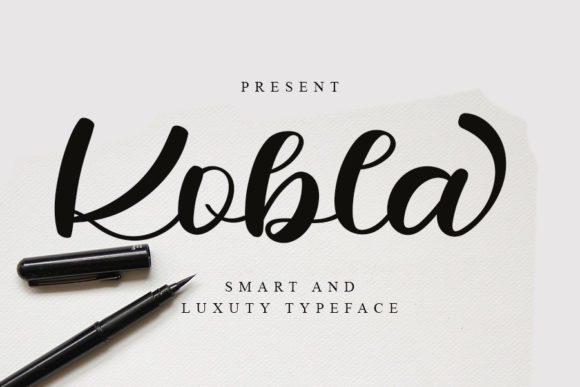
What truly sets Kobla apart from other cursive options is its balance between artistic flair and legibility. While some scripts become unreadable when used at smaller sizes or in long paragraphs, Kobla maintains a clear structure. The strokes are smooth and deliberate, avoiding the jagged edges often found in lower-quality brush fonts. The capital letters feature elegant flourishes that draw the eye, while the lowercase letters offer a relaxed, approachable feel that invites the reader in.
The font's strength also comes from its extensive character set. A robust collection of swashes means that every word can be customized to fit the specific mood of the project. You can choose between subtle accents for a professional report cover or dramatic, sweeping tails for a luxury brand logo. This variety ensures that your design never feels repetitive or generic. Furthermore, the weight of the strokes is well-proportioned, ensuring that the text remains crisp even when scaled down for mobile devices or printed on small labels.
Practical Applications Across Industries
The versatility of Kobla makes it suitable for a wide array of real-world scenarios. From personal projects to large-scale commercial campaigns, this font adapts to meet diverse needs. Understanding where to apply Kobla effectively can significantly enhance the impact of your work.
- Branding and Identity: For entrepreneurs and business owners, a strong visual identity is crucial. Kobla is perfect for creating memorable logos for lifestyle brands, coffee shops, beauty salons, and artisanal product lines. The cursive nature of the font conveys warmth and exclusivity, helping businesses connect emotionally with their audience.
- Marketing Materials: Marketers and freelancers often struggle to break through the noise of standard corporate templates. Using Kobla in email newsletters, social media graphics, or brochure headers adds a human touch that increases engagement rates. It transforms a standard announcement into a personalized note from a friend.
- Event Design: Weddings, birthdays, and galas rely heavily on typography to set the tone. Kobla excels in invitations, programs, and signage. The swashes allow for creative layouts that look custom-made, elevating the perceived value of the event.
- Education and Publishing: Educators and bloggers can use this font to highlight key concepts or create engaging headers in educational materials. It brings a sense of creativity to lesson plans or blog posts, making learning more enjoyable for students and readers alike.
- Digital Products: App developers and web designers looking to add a unique interface element can utilize Kobla for buttons, welcome screens, or promotional banners. Its PUA encoding ensures it renders correctly on different screens without breaking the layout.
Enhancing User Experience and Communication
Beyond aesthetics, the choice of typography plays a critical role in user experience (UX) and communication effectiveness. When a user encounters a font like Kobla, their brain processes the information differently compared to standard text. The fluid lines suggest movement and energy, which can subconsciously influence how they perceive the message. In branding, this translates to higher recall and stronger emotional connections.
For professionals, the efficiency gained from using a PUA-encoded font cannot be overstated. Time spent adjusting kerning or manually inserting swashes is time taken away from strategic planning. With Kobla, the workflow becomes streamlined. You type the text, and the font handles the styling nuances. This efficiency boosts productivity, allowing you to deliver projects faster without compromising on quality. Additionally, because the font is easy to implement, it reduces the barrier to entry for non-designers who want to produce professional-looking content.
Selecting and Implementing Kobla Effectively
While Kobla is a powerful tool, like any resource, it requires thoughtful implementation to yield the best results. To get the most out of this font, consider the context in which you are using it. It is generally best suited for headlines, titles, short phrases, and accent text rather than body copy. Overusing cursive scripts can lead to visual fatigue and reduce readability, especially for longer texts.
When pairing Kobla with other typefaces, aim for contrast. A clean, geometric sans-serif pairs exceptionally well with the organic curves of Kobla. This combination creates a modern yet classic look that balances elegance with clarity. Avoid pairing it with other decorative fonts, as this can create a chaotic visual hierarchy that confuses the viewer.
Before committing to a full project, test the font in various environments. Check how it looks on dark backgrounds versus light ones, and ensure it remains legible when printed on different materials. Since Kobla relies on specific encoding, always verify that the target platform supports PUA characters to prevent any display issues. By following these practical considerations, you ensure that your designs remain professional and effective.
In conclusion, Kobla represents a significant step forward in accessible, high-quality typography. Its beautiful cursive style, combined with the technical ease of PUA encoding, makes it a standout option for anyone looking to elevate their visual storytelling. Whether you are a seasoned designer or a hobbyist just starting out, adding Kobla to your toolkit will undoubtedly expand your creative possibilities. As you explore its capabilities, you may find that it quickly becomes your go-to choice for projects that require a blend of sophistication and charm.