Yearlong Font Duo: A Comprehensive Evaluation for Designers
In the expansive landscape of digital and print typography, selecting the right typeface is rarely a matter of simple preference; it is a strategic decision that influences brand perception, readability, and overall aesthetic cohesion. Yearlong has emerged as a notable option for designers seeking a specific blend of vintage charm and modern functionality. This article provides an objective analysis of the Yearlong font duo, examining its composition, practical applications, and the tradeoffs involved in integrating it into professional workflows.
Understanding the Composition of Yearlong
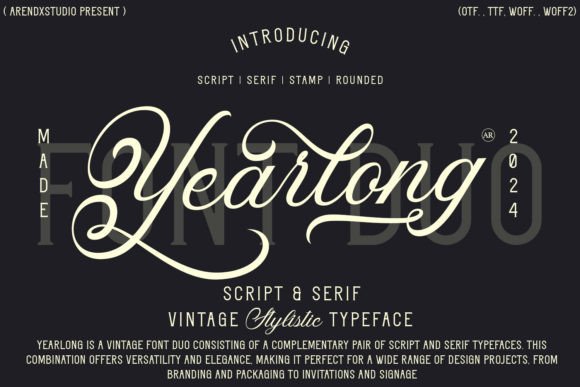
Yearlong is defined as a vintage font duo, consisting of a complementary pair of script and serif typefaces. Unlike single-family fonts that offer only one style, this pairing is designed to work harmoniously together. The collection typically includes a flowing script font intended for display purposes and a highly legible serif font optimized for body text or structural elements.
The design philosophy behind Yearlong centers on the "vintage" aesthetic. This does not merely imply old age but rather evokes a nostalgic yet timeless appeal reminiscent of early 20th-century printing and classic stationery. The script component offers fluidity and organic movement, while the serif counterpart provides stability and authority. This duality allows the typeface to function across different hierarchies within a layout, ensuring that headlines and paragraphs feel like they belong to the same family despite their stylistic differences.
Why Designers Consider Yearlong
When evaluating Yearlong, the primary driver is often the desire to inject character without sacrificing legibility. In an era where many designs lean heavily towards minimalism and sans-serif neutrality, there remains a significant market demand for warmth and personality. The vintage aesthetic of Yearlong brings a sense of history and craftsmanship to a project, which can be particularly effective in industries that value tradition, heritage, or artisanal quality.
- Versatility: The inclusion of both script and serif styles within a single purchase reduces the need to source multiple fonts from different foundries, streamlining the asset management process.
- Elegance: The refined curves of the script paired with the structured serifs create a sophisticated look that elevates the perceived value of the content.
- Nostalgia: The style taps into emotional responses associated with the past, making it a powerful tool for storytelling.
Practical Applications and Strong Fits
Determining whether Yearlong aligns with your goals requires looking at the specific context of the project. The font duo excels in scenarios where visual hierarchy and atmosphere are paramount. Below are specific situations where this typeface combination proves to be a strong fit.
Branding and Identity Systems
For businesses aiming to establish a premium or heritage-focused identity, Yearlong offers a robust foundation. The script font can serve as a distinctive logo mark or a signature element, while the serif font handles corporate communications, website copy, and product descriptions. This consistency ensures that the brand voice remains cohesive across all touchpoints.
Packaging and Label Design
In the realm of physical goods, packaging is a critical marketing channel. Yearlong is particularly well-suited for food and beverage products, cosmetics, and artisanal crafts. The vintage aesthetic suggests natural ingredients, hand-crafted processes, and high-quality standards. The contrast between the decorative script and the readable serif helps guide the consumer's eye from the brand name to the product details.
Invitations and Event Signage
Weddings, formal galas, and boutique events often require typography that conveys formality and romance. The elegant nature of Yearlong makes it an ideal candidate for wedding invitations, menus, and signage. The script adds a personal, handwritten touch, while the serif ensures that essential information (dates, locations) remains clear and easy to read.
Critical Considerations and Tradeoffs
While Yearlong offers distinct advantages, a balanced evaluation must also address its limitations. No typeface is universally applicable, and understanding where it falls short is just as important as knowing where it shines.
Readability in Small Sizes
The decorative nature of the script component means it is generally unsuitable for body text or small print. Relying on the script for anything other than headlines or short phrases can compromise readability and accessibility. Designers must strictly adhere to using the serif font for extended reading passages to maintain user experience standards.
Tone Mismatch
The vintage aesthetic is a double-edged sword. While it works beautifully for traditional or romantic themes, it may clash with projects requiring a futuristic, tech-forward, or hyper-modern vibe. Using Yearlong for a software startup, a medical technology firm, or a minimalist fashion brand could result in a dissonant message that confuses the target audience.
Web Performance and Licensing
As with any custom or specialized font family, licensing terms vary by foundry. It is crucial to verify if the license covers web embedding, especially for high-traffic websites. Additionally, loading two distinct font files (script and serif) can impact page load times if not optimized correctly. Designers should weigh the visual benefits against potential performance penalties.
Alternatives and Comparative Analysis
If Yearlong does not fully meet the requirements of a project, several alternatives exist depending on the specific needs.
- Modern Serif-Sans Pairings: For projects needing a vintage feel but with higher legibility and a cleaner look, a modern serif paired with a geometric sans-serif might be a better choice. These combinations offer a more contemporary interpretation of classic styles.
- Single-Style Vintage Fonts: If the project does not require a dual-family approach, a standalone vintage font might suffice. This reduces complexity but may lack the internal harmony of a true duo.
- Open Source Options: For budget-conscious projects, open-source vintage-style fonts are available. However, these often lack the rigorous kerning and character set completeness found in commercial fonts like Yearlong.
Decision-Making Insights
To determine if Yearlong is the right choice, designers should ask themselves a series of diagnostic questions. Does the brand narrative rely on history, craft, or elegance? Is the primary use case print-based or large-format digital displays? Will the text be read in long blocks or primarily as headlines?
If the answer to these questions leans towards tradition, elegance, and short-form communication, Yearlong is likely a strong candidate. However, if the priority is maximum data density, ultra-modern branding, or strict accessibility compliance across all devices, a more neutral or utilitarian typeface system may be preferable.
Final Thoughts on Integration
The successful integration of Yearlong depends on disciplined application. By leveraging the script for impact and the serif for substance, designers can harness the full potential of this vintage duo. It is a tool that demands respect for its historical roots while being adaptable enough for contemporary design challenges. When used with intention, Yearlong can transform a standard layout into a compelling visual narrative that resonates with audiences on an emotional level.
Ultimately, the decision to adopt Yearlong should be driven by the specific goals of the project rather than fleeting trends. Its versatility and elegance make it a valuable asset in a designer's toolkit, provided it is matched with the appropriate context and audience expectations.